


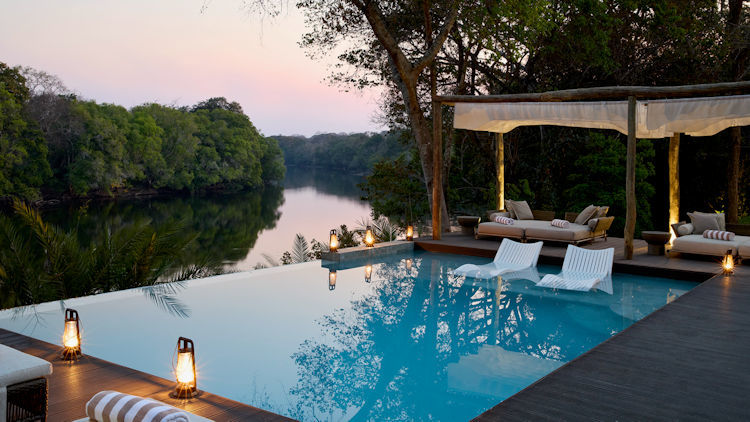
A once denuded area in north-western Zambia, 30 000 hectares of land, 30km north-west of Kafue National Park, is being impressively rehabilitated. After severe poaching, deforestation, over-fishing and dynamite fishing in the Lunga River, an altruistic family - with a vision for restoration of this once unspoiled area - acquired and fenced this wilderness, with a 2,4m boundary. The only completely fenced reserve in Zambia, Lolelunga Private Reserve is implementing ways to protect game species from poaching and the traps that wound or kill. In addition the fence serves to protect local people from the challenges of human and animal conflict, especially from big game.

Image by Lolelunga Private Reserve (Elsa Young)
Clearly a passion project, several species and sub-species of game that were originally here, are being re-introduced. Recently five cheetah were translocated into a temporary boma, where they were observed and acclimatised to the region. They have been collared for study and tracking purposes and are thriving. On a game drive from the lodge, we spot two of the cheetahs atop a mound and watch them interacting with one another, then having a quiet snooze. “These big cats, with non-retractable claws, are fast, but not as strong as leopards, lions and hyenas, so are under threat in Africa” my guide, Harrison Moyo, informs me. Our two cheetahs don’t sleep for long and are hyper-aware of their surroundings, looking up frequently. Their full bellies testify to their well-being.
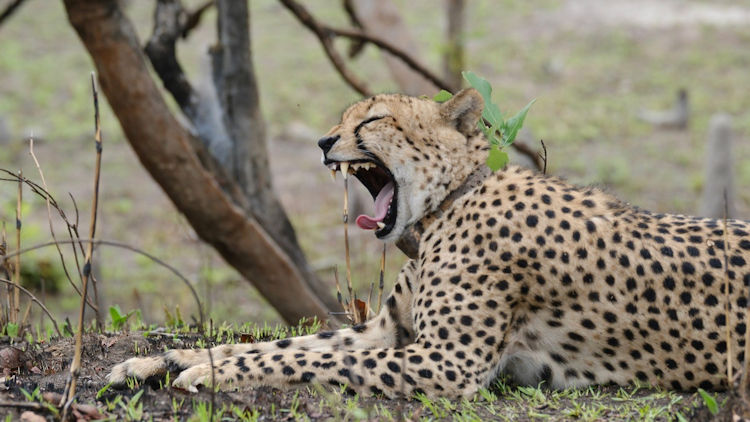
Image by Gillian McLaren
Disease free buffalo were also introduced and are doing well, with some calves born. They seem to watch us as we watch them, a curious lot. After a few days of summer rain, the bush is verdant, grass shoots are sprouting, flowers like Blood lily dot the savannah. Mushrooms the size of dinner plates decorate the mounds of fungus-growing termites. Harrison tells us that they are delicious to eat. Growing on elephant dung, we see tiny mushrooms with caps like lacy parasols.
Snouted harvester termites form termitaria from clayey soils that give the plain areas an otherworldly look, like multiple fingers pointing to the sky, or spires on the top of pagodas.
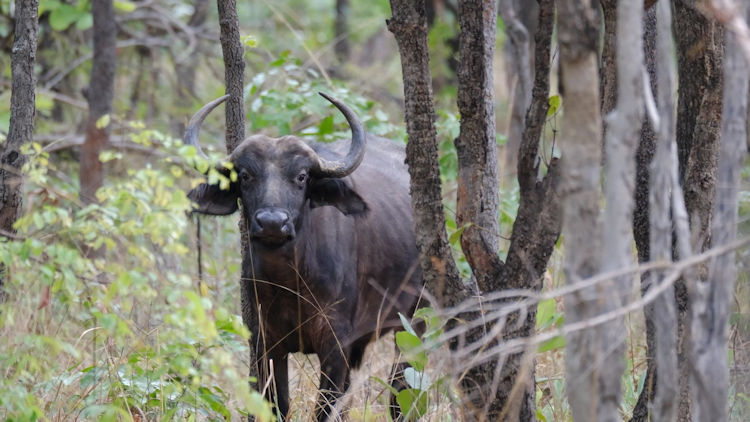
Image by Gillian McLaren
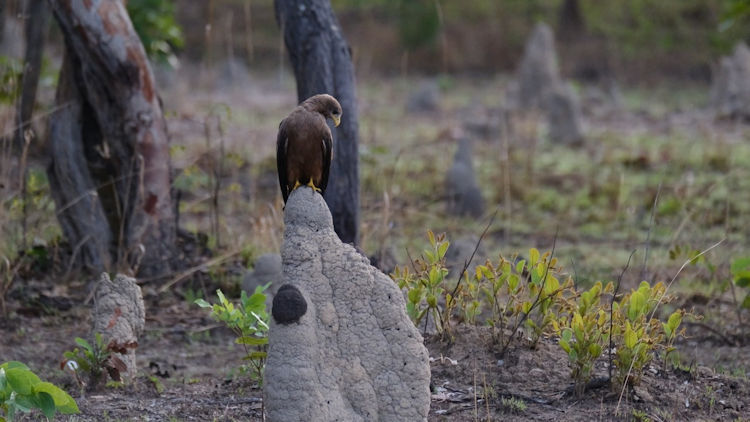
Image by Gillian McLaren
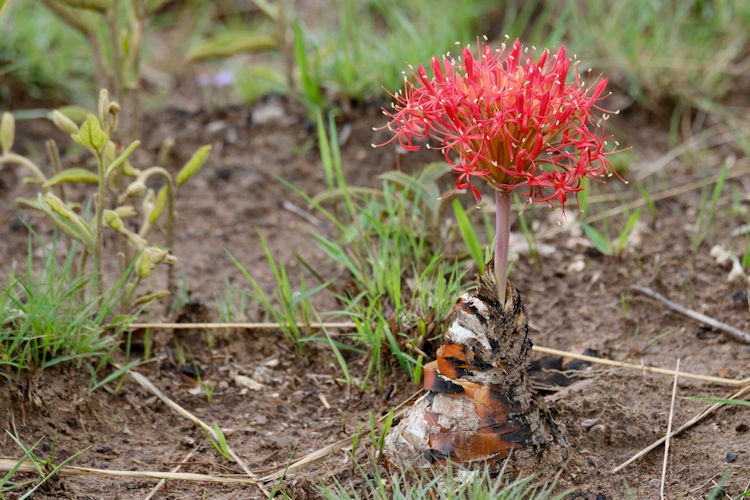
Image by Gillian McLaren
Antelope species that have been added include the rare and beautiful Roan that form harem groups of 5-15 animals with a dominant male. Flourishing in Lolelunga Private Reserve, this is a meaningful contribution towards conservation of the sub- species Hippotragus equinus cottoni found in Zambia. It’s a privilege to observe these bovids, the largest after Eland and buffalo.

Image by Gillian McLaren
Sable antelope are related to Roan, but are smaller, with stately ringed horns that rise vertically and curve backward. Roan and Sable need to drink daily, so settle near water, in areas with good drainage and good grazing. Sadly this puts these antelopes in direct conflict with local people, who also value this type of land for agriculture and livestock. Inspired by Louw & Mirdia Hanekom, Lolelunga is working directly with the nearby Kaonde tribe, to empower them, not to create dependence and to introduce modern ways of thinking. Its delightfully ironic that several of the 54 game scouts trained to patrol the reserve, are former poachers. The scouts have jurisdiction to make arrests. With their inside knowledge and the Canine Unit, these men are proving invaluable in minimising poaching. Lolelunga employs people from the local chiefdom, which adds to the commitment of the community to maintaining the renewed wilderness.
Puku are abundant and sightings of this golden yellow antelope are frequent. They form a healthy part in supporting large predators like cheetah, lion and leopard, as well as vultures, hyenas and other scavengers. Seldom seen, it’s a coup that the elusive Sitatunga - shown on the logo - is now in the wetlands of Lolelunga Private Reserve. The Southeastern black rhino - of the sub-species Diceros bicornis minor, formerly found here - are to be reintroduced in 2026, directly addressing the problem of local extinction. Yet another excellent reason to experience a safari here.
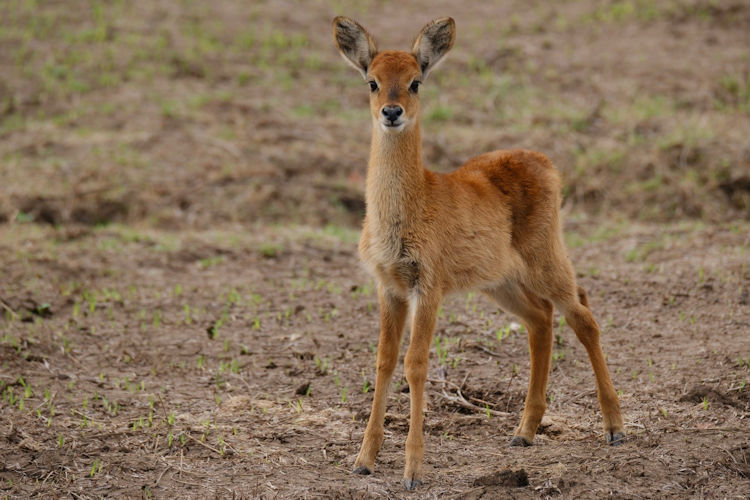
Image by Gillian McLaren
The lodge at Lolelunga overlooks the perennial Lunga River, which has water so clear and clean, I can see fish and underwater plants. With the establishment of hand-pump boreholes on the community lands, there are fewer people to pollute the Lunga. Elephants cross this expansive river, that is populated by pods of hippo and crocodiles. The morning river cruise includes a ‘floating breakfast’ comprising a gourmet feast of croissants, cheeses, pâté, parcels of mushroom, fruit and - of course - orange juice and bubbly. Birdlife is prolific. Web-footed Reed cormorant fish from logs near the river bank, so close I don’t need my binoculars. Soaring African harrier hawk land on their circular nest, placed in the main fork of the tree below the canopy. Back on the lodge deck, there is a flurry of activity as we spot a pair of Narina trogon, a mega-tick for birders!
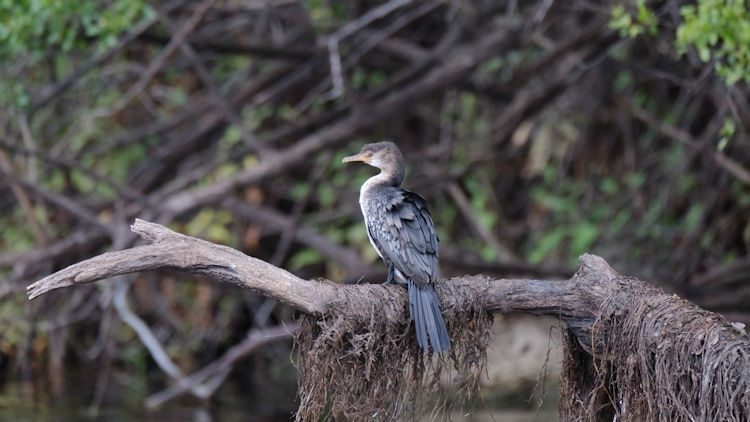
Image by Gillian McLaren
With a maximum capacity of 14 guests - in three king rooms, 2 junior suites and a family suite - service is personalised. Management couple, Darren and Heather Van der Merwe, are caring hosts, ensuring that guest preferences are considered. Realising my love of trees, they place a tree guide in my room, adding a specimen from a tree in a vase each day, labelled, plus a Lolelunga book mark at the species name. Hearing that the logo on my business card is a honey badger, they leave a hand drawn card of said badger on my pillow, with a kind message. Talk about sensitivity and kindness. Meals are served family-style, where dishes are placed on a communal table, for self-serving. One lunchtime I am faced with a delectable dilemma, as we cluster around the outdoors pizza oven to choose our toppings, before Chef Martha Mwaba fires it in the open-air pizza oven. Private dining is offered on the communal deck overlooking the Lunga River, or on the deck of one’s suite. The guest area has a rim-flow pool on the riverbank. Nearby is an equipped gym and a spa for rejuvenating treatments.
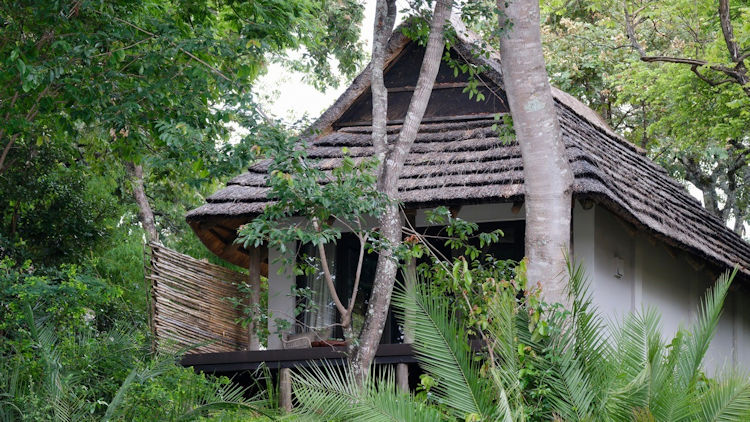
Image by Gillian McLaren
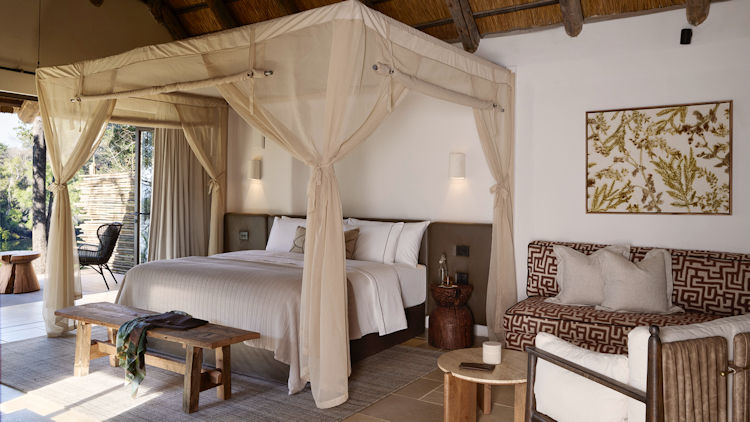
Image by Lolelunga Private Reserve (Elsa Young)

Image by Lolelunga Private Reserve (Elsa Young)
For an exclusive, intimate experience of dining and sleeping under the Milky Way, the Ngoma deck, sited on the highest point of Lolelunga Private Reserve, can be booked. The view across the is sensational, a real “Wow” experience.

Image by Lolelunga Private Reserve (Elsa Young)
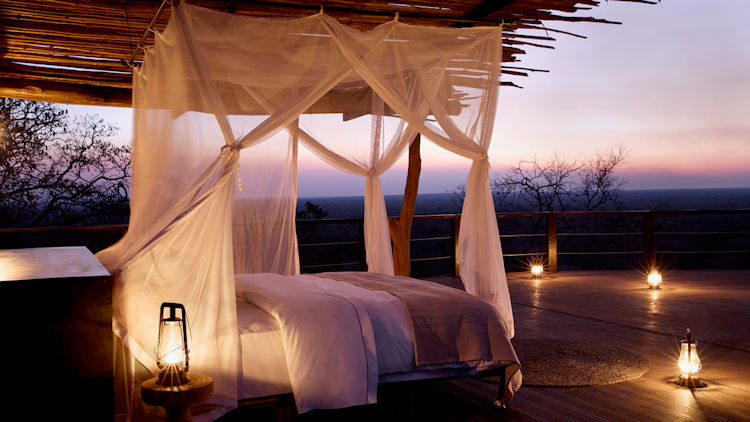
Image by Lolelunga Private Reserve (Elsa Young)
In Lolelunga Private Reserve, part of the natural heritage of Zambia is being preserved. A safari here is an immersion in the bush, educational, a contribution to the bigger picture of conservation, plus a contribution to improving health and education of local Zambians. It’s also a lot of fun and a chance to spot creatures big and small, to enjoy the many-splendored thing.
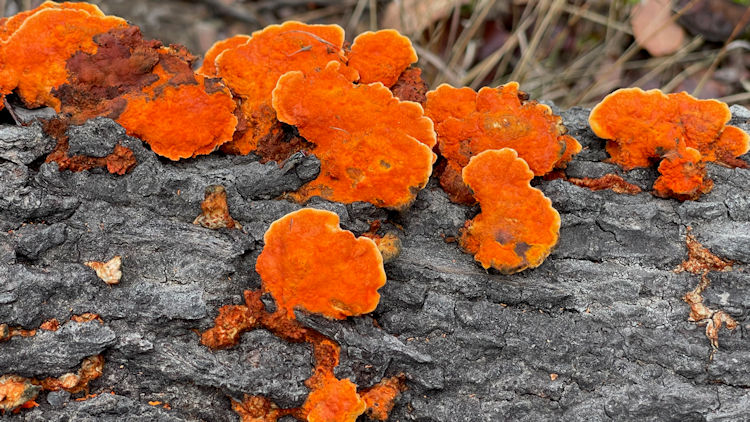
Image by Gillian McLaren
https://zambialuxurylodges.com/lolelunga/
Getting There
INTERNATIONAL TRAVEL:
Airlink, Southern Africa’s premier privately-owned regional airline serves more than 45 destinations in 15 African countries, as well as Madagascar and St. Helena Island, and offers worldwide connections through more than 35 airline partners. Discover More https://www.flyairlink.com/airlink-profile
Rewarding its loyal customers through Airlink’s innovative Skybucks frequent flyer program, travelers can sign up at www.skybucks.co.za Airlink is reliable and dependable with a fleet of more than 65 modern jets, a clear indication of their determination and commitment to remain synonymous with customer centricity, punctuality, service excellence, and reliability.
Travelers can also have the benefit of their intra-continental style business class service on select routes operating the magnificent Embraer E-195/E-190/E-170 /E-jets. Duty free shopping is available on select regional flights departing from Johannesburg only.
Business class, Full fare economy as well as Emerald and Black Tier Skybucks members can enjoy complimentary access to SLOW lounges and Bidvest Premier lounges where applicable.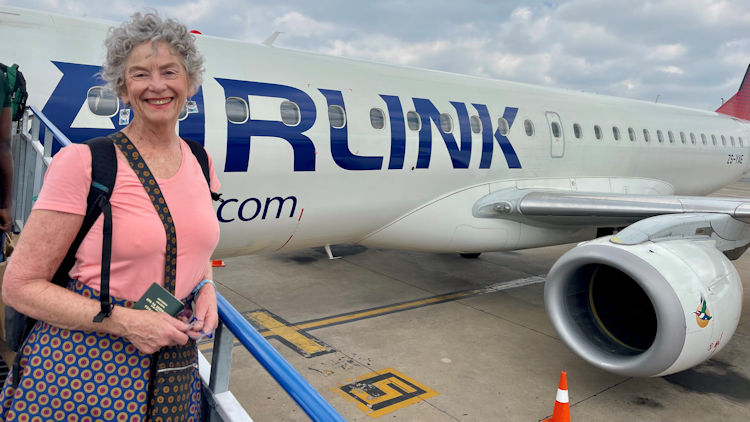
How to get there:
Airlink operates daily direct flights between O.R. Tambo International Airport and Lusaka, Zambia’s capital city.
https://www.flyairlink.com/en-za/flights-to-lusaka
Book directly on www.flyairlink.com, the FlyAirlink app, or through your Travel agent.
Kenneth Kaunda International Airport is connected to many international destinations via regular, direct flights.
DOMESTIC CHARTER FLIGHTS
With scheduled departures from Lusaka International on a Wednesday & Sunday, guests will be flown by private charter into Lolelunga Private Reserve (+/-1 hour). After landing on the gravel airstrip, Lolelunga staff will be waiting to pick up guests & transfer to the lodge, a 5 minute drive away.
ZAMBIA LUXURY LODGE COLLECTION:
Established in 2024, the company offers safari experiences for both seasoned enthusiasts and first-time visitors to Africa. Four exceptional lodges - located in Zambia's prime wildlife locations, including north, close to the Kafue National Park, South Luangwa and Lower Zambezi National Parks - comprise a circuit showcasing the best of Zambia.
For reservations, packages with or without flights are available upon request; special occasions and seasonal options are also available. Contact reservations@zambialuxurylodges.com
https://zambialuxurylodges.com/
Text and images by Gillian McLaren (@Jetset_Gillian) and Lolelunga Private Reserve
Taken from: https://www.luxurytravelmagazine.com/news-articles/lolelunga-private-reserve-a-triumph-of-rewilding

Image by Gillian McClaren - Madagascar is less well known, yet the islands are rich with ingredients for a blissful tropical holiday.
The 12 South Beach Villas are spread out along the beach, set under shady trees for seclusion, close to the calm warm waters of the ocean. In front of each private veranda are sun loungers and an umbrella, creating an atmosphere of seclusion and tranquillity. After a stroll on the beach and clambering over black rocks to watch a melted vermilion sunset, a massage by the Malagasy therapist adds to the feeling of Tsarabanjina nirvana. The rustic spa on the beach, has an open side to view the gentle waves and hear them lapping on the shore.
Set on a hill above North Beach, 13 villas with their own terrace are surrounded by indigenous trees and bushes. This enhances privacy and frames the views of private deck chairs on the sun-bleached sand, to the cerulean ocean, with the occasional passing dhow. A subtle scent of ylang-ylang comes from a Madagascar-shaped soap in the bathroom, through the louvres that link the two areas. It’s tempting to linger on the king-size bed with its white linen, under the draped mosquito net, gazing at the rosewood walls and palm-leaf thatched roof, but the aquamarine water calls and snorkelling is easy, right there off the almost deserted beach.
 Constance Tsarabanjina is a perfect eco-lodge positioned for learning to scuba dive.


In remote north-west Madagascar, in Tsingy de Namoroka National Park, which is almost unknown to travellers or researchers, the Madagascar Classic Collection has established Namoroka Tsingy Camp. This stylish accommodation situated amongst the dramatic, other-worldly Tsingy formations now allows visitors to explore this once-inaccessible natural wonder.


The easiest forest walk, a 15-minute drive from Namoroka Tsingy Camp, is a 3km circuit that takes us about two hours. I’m thrilled to spot the rare Schlegel’s Asity, a mega-tick for birders! A Giant coua adds to my bird list. Lovable lemurs are easily seen and include Von der Decken’s sifaka, endemic to Namoroka.

On a 1.5km trail, starting at the camp, where the Ampandrana stream flows between the trees, we see two species of nocturnal mouse lemur, transparent geckos, and a Madagascar scops owl. As the Namoroka National Park has no lights at all, it’s a dark zone where the stars are super-bright in clear skies.
A 25-minute drive from camp, the Ambozimarohabo trail has splendid baobabs, where their exposed roots are so large we sit on them for a rest. Growing on the tsingy are quirky-looking xerophytic Pachypodiums, with fat stems to store water. In the semi-dry deciduous forest, we watch rufous brown lemur, the critically endangered Decken’s sifaka and Tsiombikibo sportive lemur.

After each exhilarating trail, it’s blissful to return to Namoroka Tsingy Camp, to spruce up in my outdoor shower, before an alfresco meal with all guests, at a table set between tsingy and stacked stone walls. It’s convivial as we savour South African wine, chatting about the astonishing geological wonders and biodiversity that we have been privileged to see. Particularly impressive are thousands of roosting fruit bats, the Madagascar flying foxes, looking like ripe fruit in the trees before taking off with squealing and unfurled leathery wings of 1.5–1.7 metres.
The presence of Namoroka Tsingy Camp, in this remote, surreal setting, is impressive in itself. I luxuriate in my tent, listening to the rasping call of a Madagascan nightjar, grateful for this life-enhancing expedition.
Airlink operates direct flights from Johannesburg to Antananarivo four times a week. Travel arrangements courtesy of MadagasCaT Travel.


